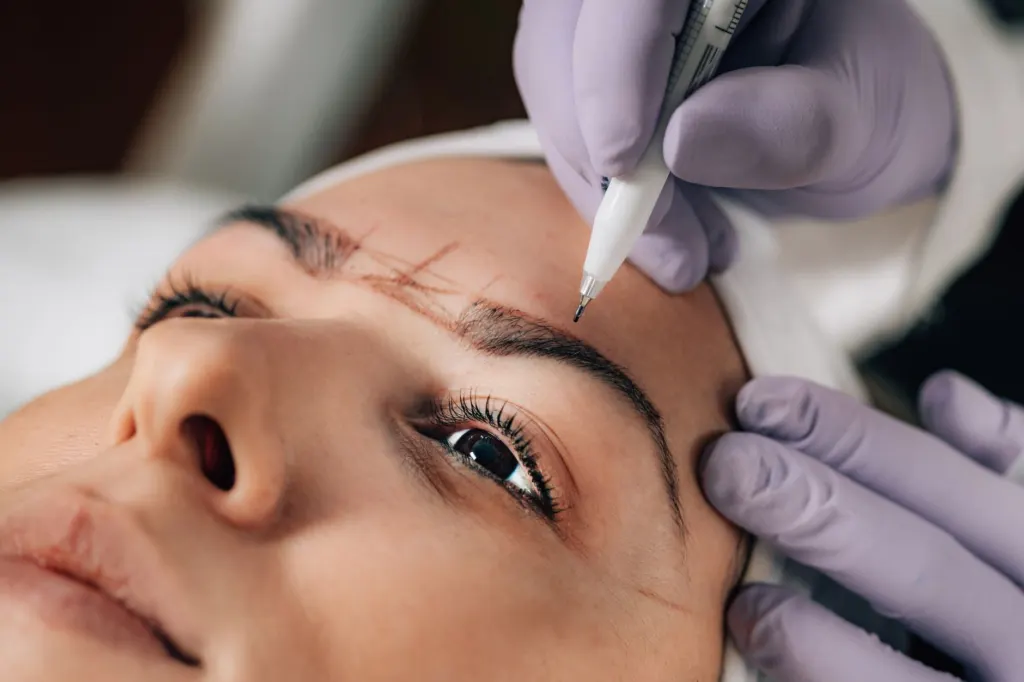
Microblading is a semi-permanent eyebrow treatment that draws fine, hair-like strokes into the skin with a hand-held tool. The strokes are filled with pigment, so sparse brows look fuller and more defined. Results usually last one to three years, although they fade gradually. This guide explains how microblading works, what affects the price and the checks to make before you book.
How microblading works
An artist first maps a brow shape that suits your face and agrees it with you. Then they numb the area and use a blade made of tiny needles to scratch fine lines into the top layer of skin. Pigment goes into those lines, so each stroke looks like a single hair. The first session usually takes around two hours. After that, a top-up appointment some weeks later fills any gaps that faded while the skin healed.
How long does microblading last?
Most people see results for one to three years. However, several things shorten that time:
- Oily skin: strokes blur and fade faster, so powder brows often suit oily skin better.
- Sun exposure: UV light breaks down pigment, so use sunscreen on healed brows.
- Skincare: exfoliating acids and retinoids near the brows speed up fading.
- Aftercare: picking scabs in the first weeks pulls pigment out.
Because microblading fades, most people book a colour boost every year or so. Our microblading aftercare guide explains how to protect the result.
What affects the price
Prices vary widely across the UK, so compare what is included rather than headline figures. The artist’s experience, the area and the clinic all play a part. Also, check whether the top-up session is included, because some quotes leave it out.
| Question to ask | Why it matters |
|---|---|
| Is the top-up included? | A separate top-up can add a lot to the total |
| Can I see healed results, not just fresh ones? | Fresh brows always look sharper than healed ones |
| Is a patch test done first? | It checks for a reaction to the pigment |
| Are you registered with the council? | Required in many areas for skin treatments |
Is microblading right for you?
Microblading suits people with sparse or thin brows and normal to dry skin. However, it may not be suitable if you are pregnant, prone to keloid scars, taking blood thinners or have active skin conditions near the brows. In those cases, speak to your GP or pharmacist first. Also, if your skin is very oily, consider powder brows instead. Our guide to microblading vs powder brows compares the two.
Checklist before you book
- Look at healed photos of the artist’s own work.
- Ask how the artist is registered or licensed. GOV.UK explains licensing for skin piercing and tattooing, which covers semi-permanent make-up in many areas.
- Have a consultation and patch test before the treatment day.
- Agree the shape and colour before any work starts.
- Get written aftercare instructions.
The NHS has general advice on non-surgical cosmetic procedures, including choosing a practitioner. If you want a lower-commitment option first, see brow lamination or an eyebrow tint.